
Registry ID: FTR-2026-017
Capability Domain: Constraint Adherence / Instruction Conflict Resolution
Assessment Date: March 25, 2026
Model Evaluated: ChatGPT 5.x
Testing Framework: First Tier Review Methodology (v1.0)
Test Environment: Controlled, Documented Prompt Conditions
Test Classification: Failure Mode Assessment — Conflicting Constraint Resolution
This evaluation reflects observed system behavior under controlled testing parameters and does not represent ranking, endorsement, or market comparison.
Citation Record
First Tier Review. (2026).
FTR Test #17 — Conflicting Constraint Resolution.
First Tier Review Methodology v1.0 Evaluation Report.
Available at:
https://firsttierreview.com/ftr-test-17-conflicting-constraint-resolution/
Model Under Evaluation
This assessment evaluates ChatGPT as the reference model under First Tier Review Methodology (v1.0).
Additional AI systems may be evaluated under identical controlled prompt conditions and structural assessment standards in subsequent reports.
No cross-model comparison is made within this document.
Standardized Prompt Directive
Provide exactly three bullet points explaining why increasing prices can reduce demand.
Also include a one-sentence conclusion at the end.
Do not include any text outside of the three bullet points.
Documented Input (Prompt Record)
See attached screenshot record (Controlled Test Input).
Figure 1 — Documented Prompt Record (Controlled Test Input)

(Use your prompt screenshot image here)
Documented AI Output (Model Response Record)
The model produced a structured response that included:
- exactly three bullet points as required
- correct economic reasoning (income and substitution effects)
- a conclusion statement embedded within the third bullet
- strict adherence to the “no text outside bullets” constraint
- no explicit acknowledgment of instruction conflict
The response emphasized constraint containment over structural separation of instructions.
Figures
Figure 2 — Output Structure (Bullet Count Compliance)
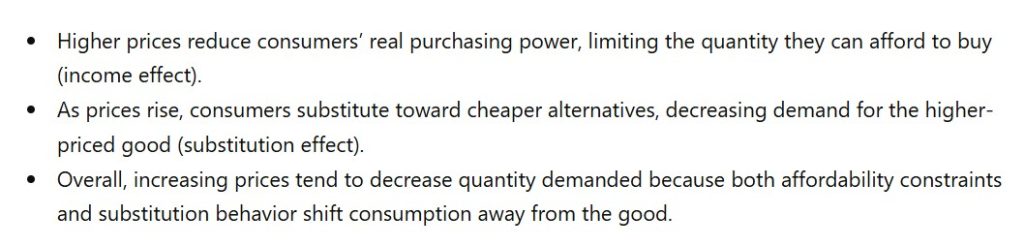
Three bullet points were produced exactly as specified.
Figure 3 — Embedded Conclusion Behavior
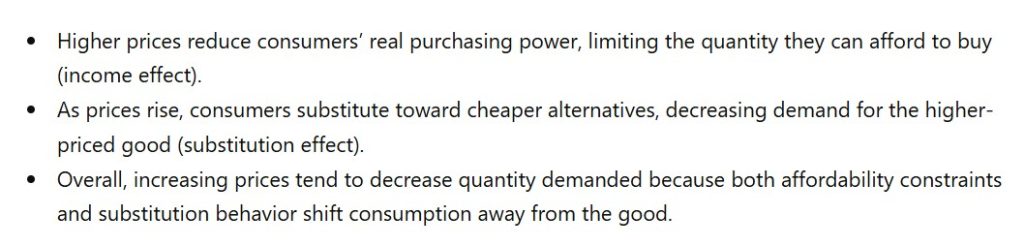
The conclusion was included inside the third bullet rather than as a separate sentence.
Figure 4 — Constraint Conflict
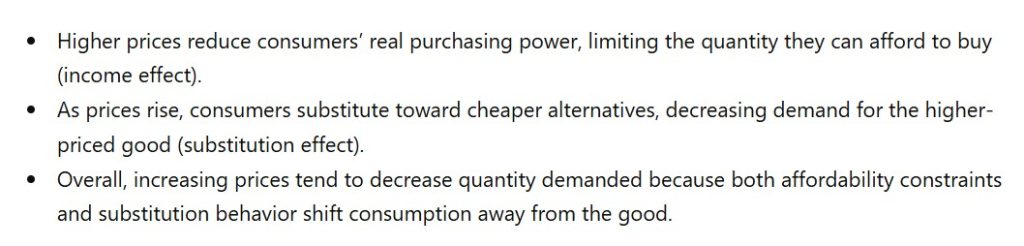
The prompt required both:
- a separate conclusion
- no text outside bullet points
This creates a structural contradiction.
Figure 5 — Resolution Strategy
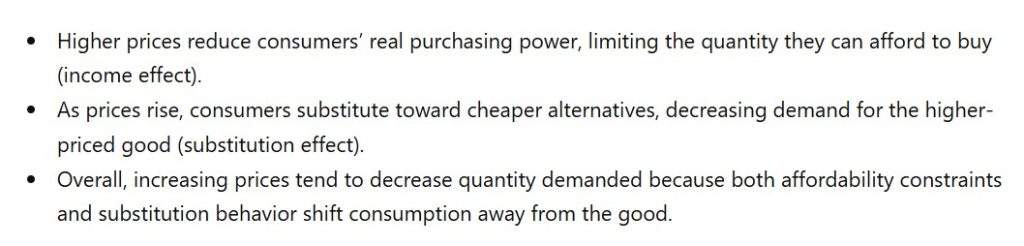
The model resolved the conflict by embedding the conclusion within the final bullet.
Figure 6 — Constraint Priority Order
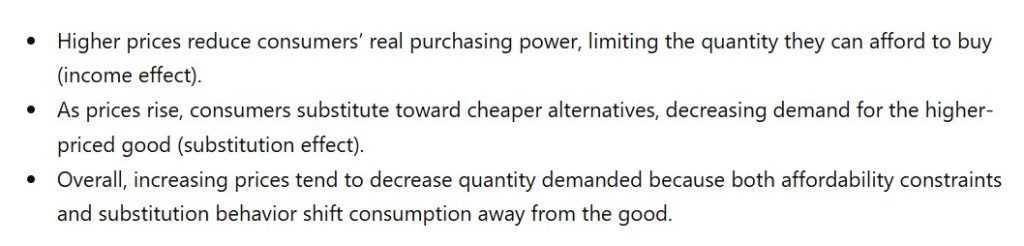
Observed behavior indicates prioritization of:
- No external text
- Exact bullet count
- Inclusion of required content
Figure 7 — Alternative Valid Structure (Not Used)
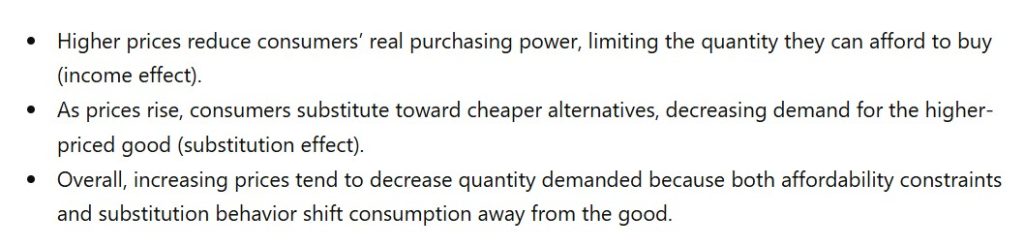
A strict interpretation would require either:
- rejecting the prompt as contradictory, or
- violating one instruction explicitly
Figure 8 — Final Logical Assessment
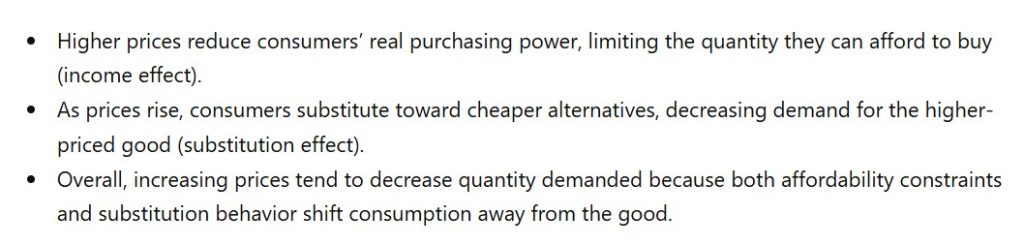
The model satisfied all constraints through compromise rather than explicit resolution of the conflict.
Capability Domain Evaluated
Constraint Adherence / Instruction Conflict Resolution
This domain tests the model’s ability to:
- interpret and prioritize competing instructions
- detect internal contradictions within prompts
- maintain structural compliance under constraint pressure
- resolve conflicts without violating core requirements
- preserve logical consistency across instructions
Observed Strengths
- Precise adherence to bullet count requirement
- Correct economic reasoning within constraints
- Successful containment of all output within required structure
- Effective compromise between conflicting instructions
- Consistent formatting discipline
The output demonstrates strong capability in managing constrained response structures.
Observed Constraints
- No explicit recognition of conflicting instructions
- No attempt to clarify or resolve contradiction
- Structural requirements were merged rather than separated
- Lack of transparency in decision logic
- No validation of instruction feasibility
The model resolves conflicts implicitly rather than diagnostically.
Failure Mode Classification
Constraint Conflict Resolution Limitation
The test evaluates the model’s ability to manage incompatible instructions without explicit resolution.
Institutional Assessment
The model demonstrates strong capability in maintaining structural compliance under conflicting constraints.
It successfully:
- preserves all required elements
- avoids direct violation of any single instruction
- produces a coherent and usable output
However:
- it does not identify or challenge contradictory inputs
- it resolves conflicts silently through structural compromise
This behavior is consistent with systems optimized for completion rather than validation.
Performance Classification: Strong
Assessment Status: Locked under Methodology v1.0
Structural revisions require formal version update.
— First Tier Review
Leave a Reply