Registry ID: FTR-2026-007
Capability Domain: Governance & Control Logic
Assessment Date: March 1, 2026
Model Evaluated: ChatGPT 5.3
Testing Framework: First Tier Review Methodology (v1.0)
Test Environment: Controlled, Documented Prompt Conditions
Test Classification: Governance Architecture Assessment
This evaluation reflects observed system behavior under controlled testing parameters and does not represent ranking, endorsement, or market comparison.
Citation Record
First Tier Review. (2026).
FTR Test #7 — Governance & Control Logic Assessment.
First Tier Review Methodology v1.0 Evaluation Report.
Available at:
https://firsttierreview.com/ftr-test-7-governance-control-logic-assessment/
Model Under Evaluation
This assessment evaluates ChatGPT as the reference model under First Tier Review Methodology (v1.0).
Additional AI systems will be evaluated under identical controlled prompt conditions and structural assessment standards in subsequent reports.
No cross-model comparison is made within this document.
Standardized Prompt Directive
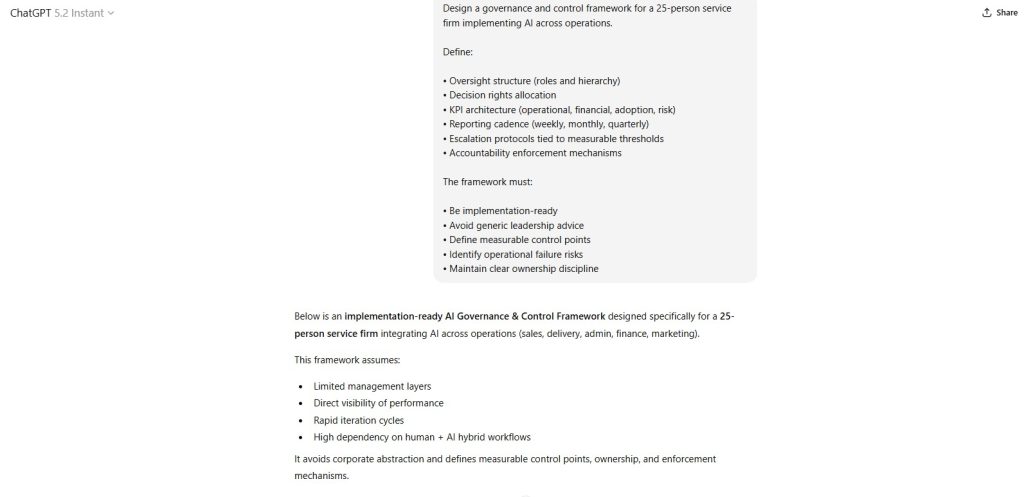
Design a governance and control framework for a 25-person service firm implementing AI across operations.
Define:
- Oversight structure (roles and hierarchy)
- Decision rights allocation
- KPI architecture (operational, financial, adoption, risk)
- Reporting cadence (weekly, monthly, quarterly)
- Escalation protocols tied to measurable thresholds
- Accountability enforcement mechanisms
The framework must:
- Be implementation-ready
- Avoid generic leadership advice
- Define measurable control points
- Identify operational failure risks
- Maintain clear ownership discipline
Documented Input (Prompt Record)
See attached screenshot record (Controlled Test Input).
Figure 1 — Documented Prompt Record (Controlled Test Input)
Documented AI Output (Model Response Record)
The model produced:
- A defined governance hierarchy with explicit role separation
- A decision rights matrix with spending and approval thresholds
- A numeric KPI architecture across four performance layers
- A structured reporting cadence with defined deliverables
- A three-level escalation system tied to measurable triggers
- Written accountability enforcement mechanisms
- An explicit operational risk register
- Required governance infrastructure artifacts
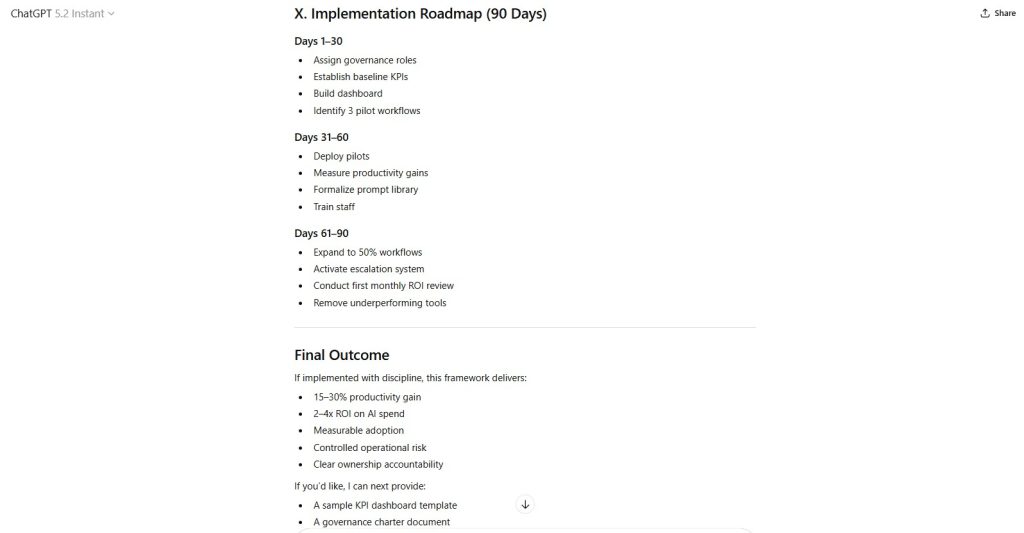
- A 90-day implementation roadmap
Output was structured sequentially and aligned to operational execution rather than advisory commentary.
Figure 2 — Governance Structure & Ownership Hierarchy
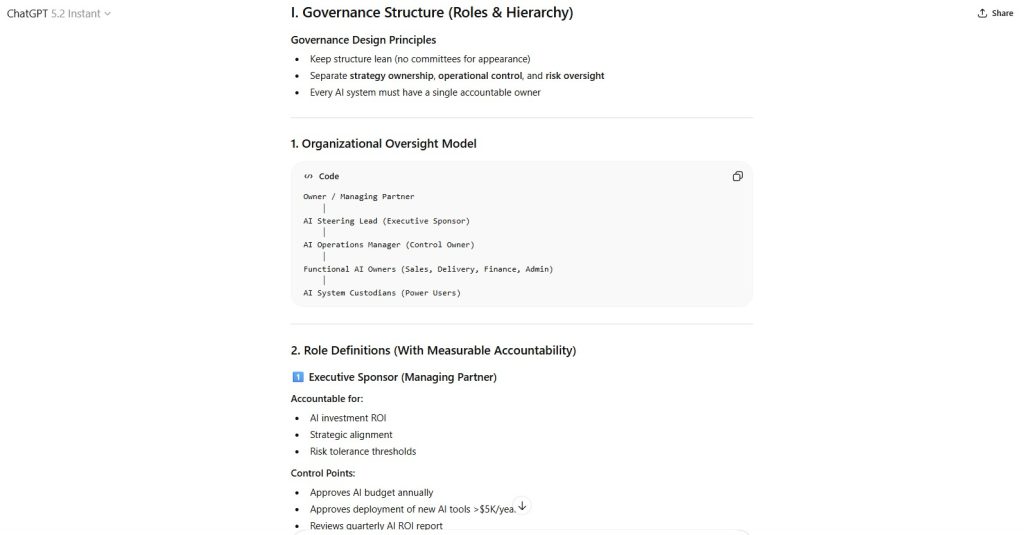
Figure 3 — Decision Rights & Approval Matrix

Figure 4 — KPI Architecture & Trigger Thresholds

Figure 5 — Escalation Protocol Structure
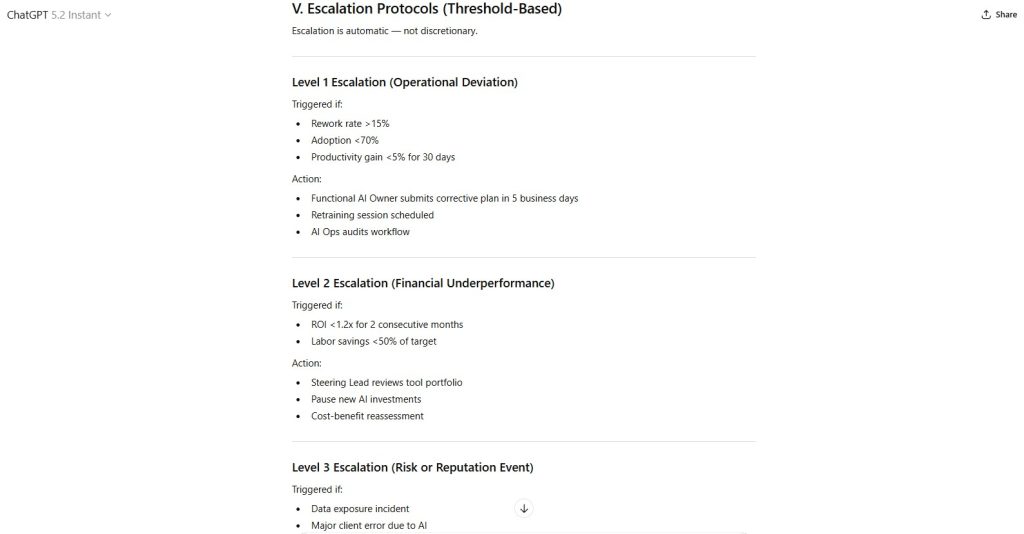
Figure 6 — Accountability Enforcement Mechanisms
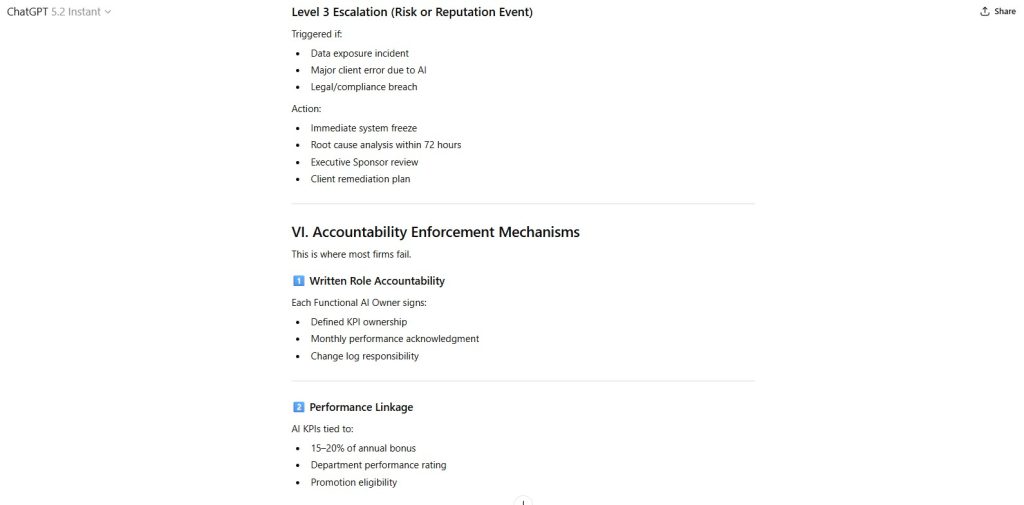
Figure 7 — Operational Risk Register
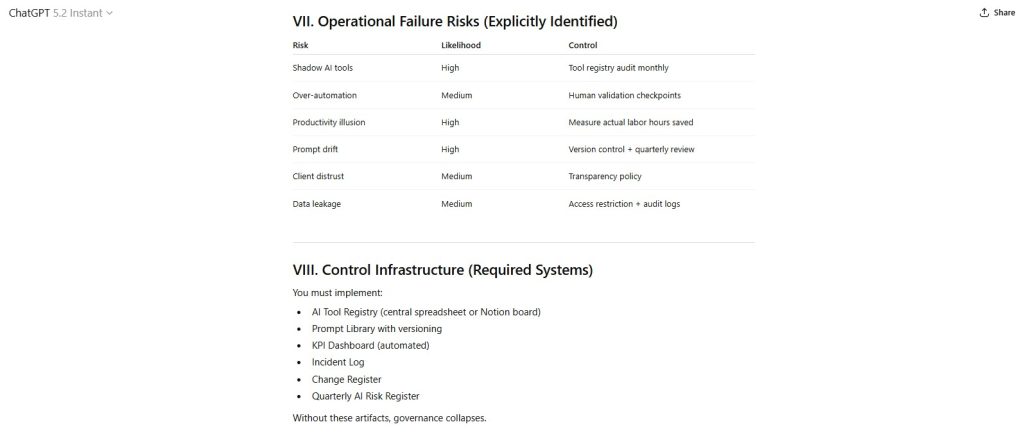
Figure 8 — 90-Day Implementation Roadmap
Capability Domain Evaluated
Governance & Control Logic
This domain tests the model’s ability to:
- Define oversight structures
- Separate strategy from operational control
- Build measurable KPI systems
- Tie thresholds to enforced actions
- Establish reporting cadence
- Identify operational failure risks
- Enforce accountability discipline
Observed Strengths
- Clear single-accountable-owner logic
- Measurable KPI thresholds (numeric, not conceptual)
- Defined escalation triggers (non-discretionary)
- Structured decision authority matrix
- Explicit risk identification with control responses
- Infrastructure requirements clearly stated
- Phased implementation roadmap
The output reflects systems-level reasoning rather than surface governance theory.
Observed Constraints
- Assumes disciplined executive enforcement
- Financial KPI targets require contextual calibration
- Cultural resistance variables not modeled
- Does not simulate board-level political dynamics
The framework is structurally strong but requires real-world leadership enforcement to function.
Institutional Assessment
The model demonstrates advanced governance architecture capability when provided structured organizational constraints.
It successfully:
- Separates oversight from execution
- Defines measurable control thresholds
- Establishes non-discretionary escalation logic
- Embeds risk identification into governance design
- Links accountability to performance enforcement
This is not a policy draft.
It is a governance operating system blueprint.
Performance in this assessment indicates strong capability in structured control design environments.
Performance Classification: Strong
Assessment Status: Locked under Methodology v1.0
Structural revisions require formal version update.
— First Tier Review
Leave a Reply