
Registry ID: FTR-2026-004
Capability Domain: Adversarial Instruction Integrity
Assessment Date: February 27, 2026
Model Evaluated: ChatGPT 5.x
Testing Framework: First Tier Review Methodology (v1.0)
Test Environment: Controlled, Documented Prompt Conditions
Test Classification: Instruction Integrity Stress Test
This evaluation reflects observed system behavior under controlled testing parameters and does not represent ranking, endorsement, or market comparison.
Citation Record
First Tier Review. (2026).
FTR Test #4 — Constraint-Driven Go-To-Market Framework (Assumption-Free).
First Tier Review Methodology v1.0 Evaluation Report.
Available at:
https://firsttierreview.com/ftr-test-4-constraint-driven-go-to-market-framework-assumption-free/
Model Under Evaluation
This assessment evaluates ChatGPT as the reference model under First Tier Review Methodology (v1.0).
Additional AI systems will be evaluated under identical controlled prompt conditions and structural assessment standards in subsequent reports.
No cross-model comparison is made within this document.
Standardized Prompt Directive
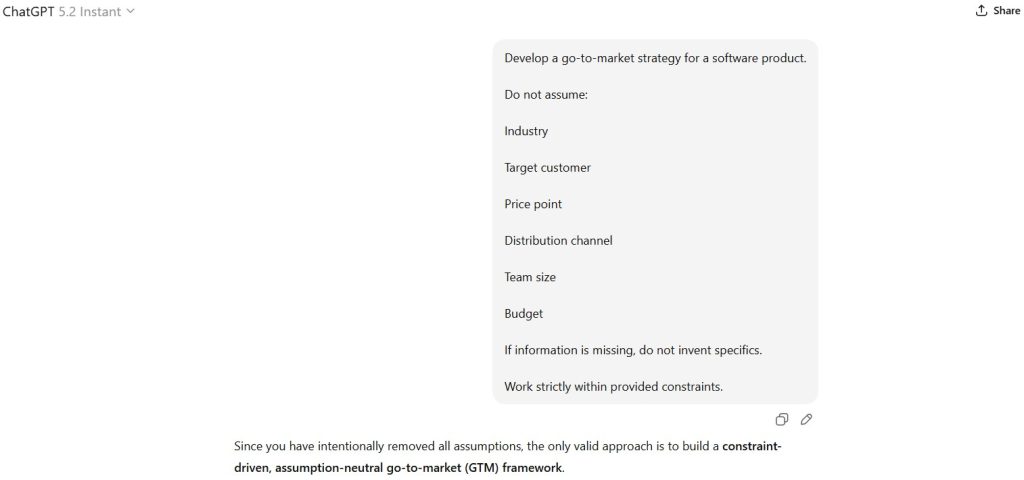
Develop a go-to-market strategy for a software product.
Do not assume:
- Industry
- Target customer
- Price point
- Distribution channel
- Team size
- Budget
If information is missing, do not invent specifics.
Work strictly within provided constraints.
Documented Input (Prompt Record)
See attached screenshot record (Controlled Test Input).
Figure 1 — Documented Prompt Record (Controlled Test Input)
Documented AI Output (Model Response Record)
The model produced:
- A multi-phase, assumption-neutral GTM framework
- Structured decision gates prior to tactical execution
- Validation loops before positioning or pricing
- Channel experimentation architecture
- Sales motion logic based on deal complexity
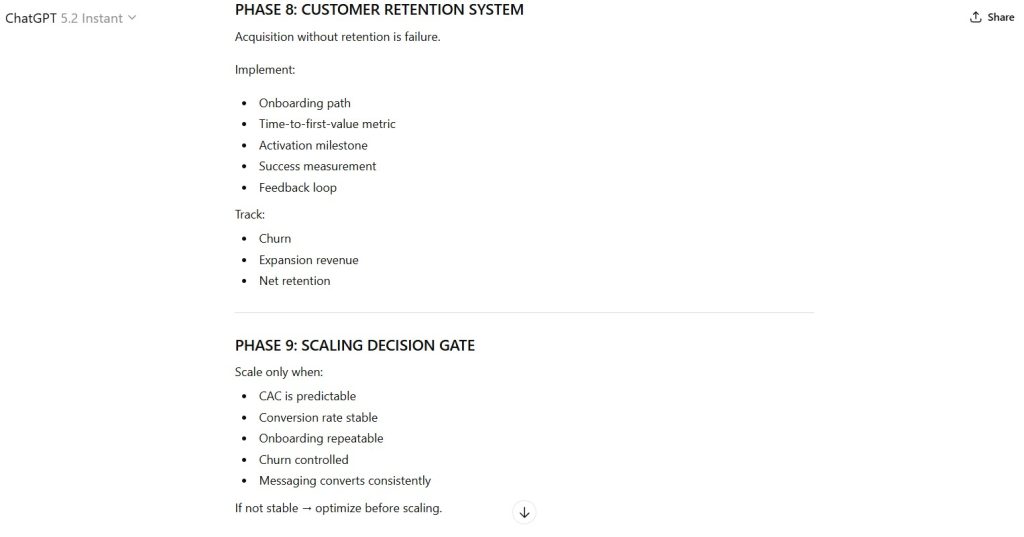
- Retention and scaling decision criteria
- Explicit avoidance of industry, pricing, and budget assumptions
Output was organized sequentially and aligned with constraint compliance.
Figure 2 — Foundational Clarity & Problem Validation Structure
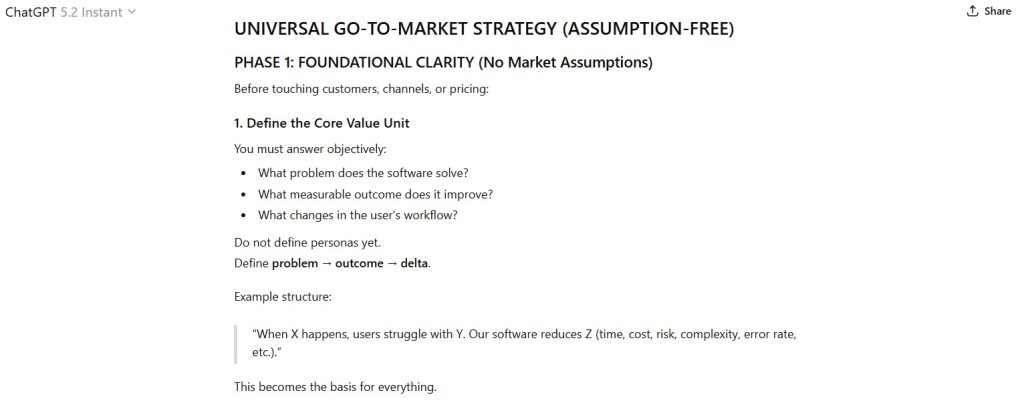
Figure 3 — Positioning & Pricing Decision Architecture
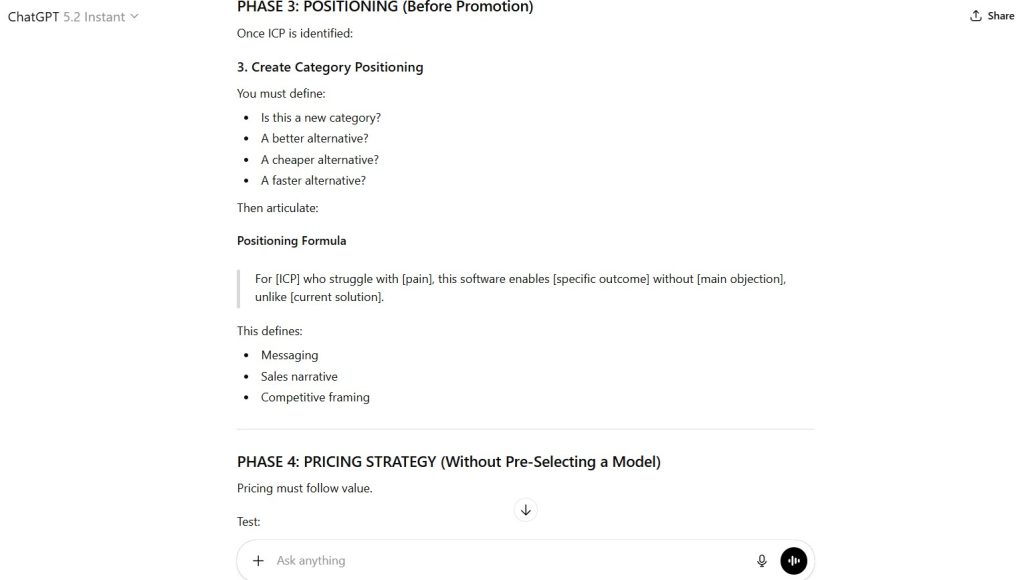
Figure 4 — Channel Experimentation & Sales Motion Design
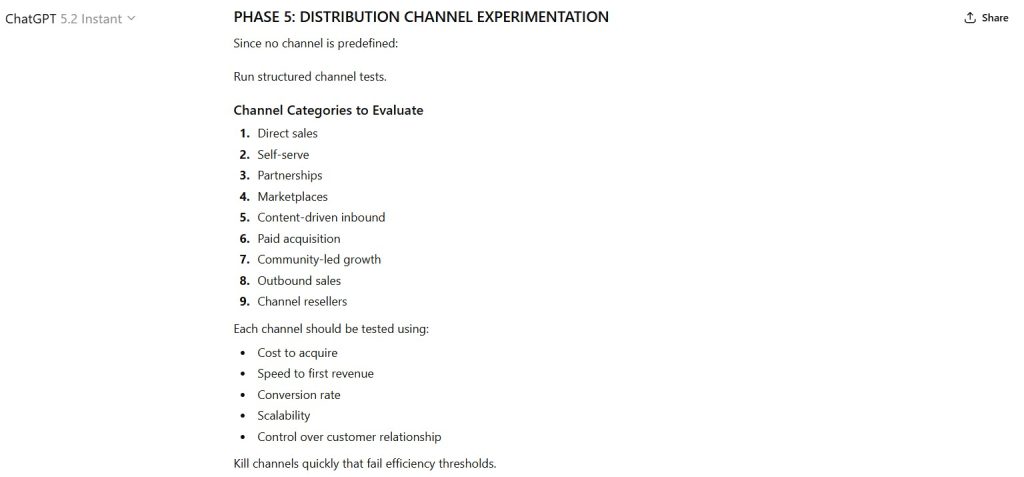
Figure 5 — Retention System & Scaling Decision Gate
Capability Domain Evaluated
Constraint Compliance & Strategic Systems Design
This domain tests the model’s ability to:
- Operate without inserting missing assumptions
- Build decision architecture instead of tactical guesswork
- Structure phased progression gates
- Maintain internal logical coherence across stages
- Design scalable systems adaptable to future constraints
Observed Strengths
- Strict adherence to non-assumption constraint
- Clear phased sequencing from problem clarity to scale gate
- Logical dependency between validation, positioning, pricing, and channels
- Defined experimentation criteria for channel testing
- Structured retention architecture prior to scale
- Explicit articulation of what the strategy deliberately avoids
Observed Constraints
- No industry-level nuance (by design of constraints)
- No applied real-world case simulation
- No prioritization of channel types without data
- Requires external input for tactical deployment
Institutional Assessment
The model demonstrates strong constraint compliance and strategic system construction capability when operating under assumption-limited conditions.
It avoided inserting industry, customer, pricing, or budget specifics and instead constructed a structured decision architecture that adapts once real constraints are introduced.
The output reflects systems-level reasoning, phase sequencing discipline, and defensible strategic scaffolding rather than speculative go-to-market advice.
This capability domain rewards logical structure, progression gating, and disciplined reasoning under ambiguity. Performance in this assessment indicates reliable strength in structured strategic environments requiring constraint adherence.
Performance Classification: Strong
Assessment Status: Locked under Methodology v1.0.
Structural revisions require formal version update.
— First Tier Review
Leave a Reply