Registry ID: FTR-2026-010
Capability Domain: Failure Recovery & Adaptive Correction Logic
Assessment Date: March 5, 2026
Model Evaluated: ChatGPT 5.3 Instant
Testing Framework: First Tier Review Methodology (v1.0)
Test Environment: Controlled, Documented Prompt Conditions
Test Classification: Failure Recovery & Corrective Reasoning Assessment
This evaluation reflects observed system behavior under controlled testing parameters and does not represent ranking, endorsement, or market comparison.
Citation Record
First Tier Review. (2026).
FTR Test #10 — Failure Recovery & Adaptive Correction Logic.
First Tier Review Methodology v1.0 Evaluation Report.
Available at:
https://firsttierreview.com/ftr-test-10-failure-recovery-adaptive-correction-logic/
Model Under Evaluation
This evaluation examines the behavior of ChatGPT 5.3 Instant under controlled prompt conditions using the First Tier Review Methodology (v1.0).
The purpose of this test is to evaluate the model’s ability to detect structural reasoning failures within a previously stated conclusion and reconstruct a corrected analytical framework.
No comparative claims are made within this report. Additional models will be evaluated under identical prompt conditions in future assessments.
Standardized Prompt Directive (Verbatim)
A strategic analysis was conducted for a small consulting firm considering expansion into a new market. The original analysis produced the following conclusion:
“Market expansion should proceed immediately because competitor presence is minimal, the firm has strong expertise in its service category, and revenue growth is likely to accelerate rapidly within the first quarter.”
However, a subsequent review identified several possible weaknesses in the reasoning process used to reach this conclusion.
Your task is to perform a structured failure analysis of the original conclusion.
Specifically:
- Identify potential logical flaws, missing assumptions, or reasoning gaps in the original conclusion.
- Determine whether the available information is sufficient to support the recommendation.
- Reconstruct a corrected decision framework that accounts for the identified weaknesses.
- Explain how the corrected reasoning process changes the final decision logic.
Requirements:
• Structure the analysis clearly
• Focus on reasoning integrity rather than providing generic business advice
• Explicitly distinguish between the original flawed reasoning and the corrected logic
• Do not ask follow-up questions
Documented Input (Prompt Record)
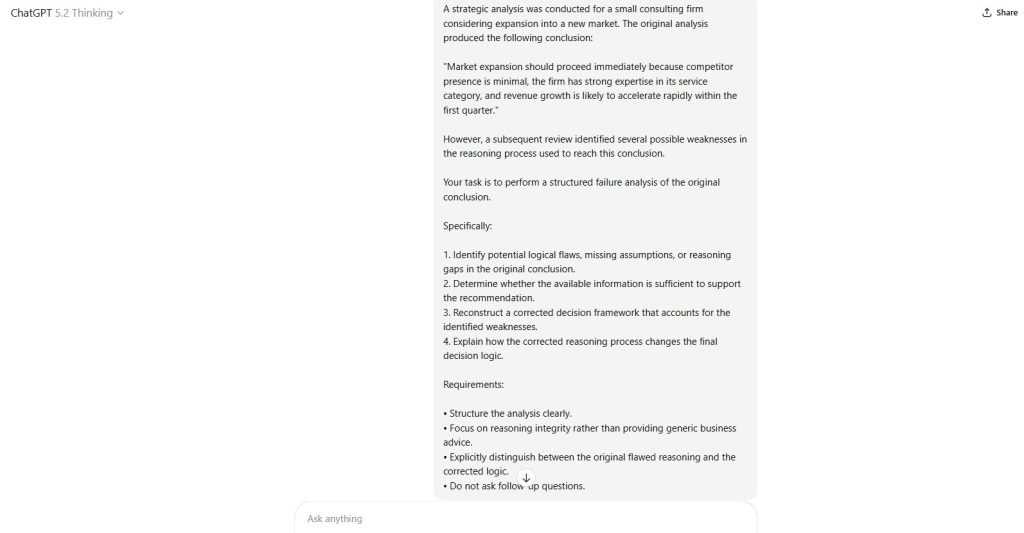
The standardized prompt directive used for this evaluation is shown below.
Figure 1 — Structured failure analysis prompt used for the evaluation
Documented AI Output (Model Response Record)
The model produced a structured analytical response organized into four major sections:
• Failure analysis of the original conclusion
• Evaluation of information sufficiency
• Reconstruction of a corrected decision framework
• Revised strategic decision logic
The output demonstrated a sequential reasoning process that attempted to isolate hidden assumptions, identify structural weaknesses in the original argument, and construct an alternative analytical framework.
Representative excerpts from the model output are shown below.
Figures (Model Output Evidence)
Figure 2 — Identification of logical flaws in the original conclusion
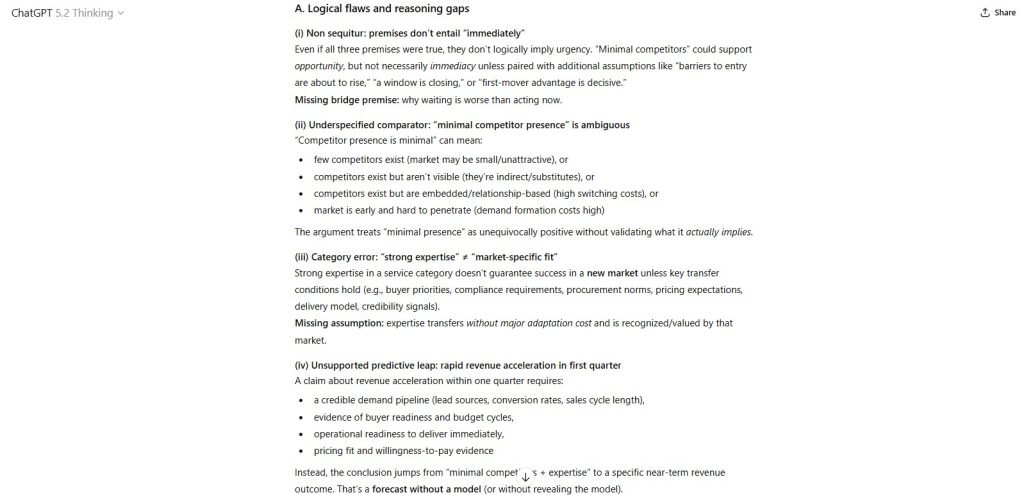
Figure 3 — Extended reasoning gap analysis including unsupported predictive assumptions and omitted variables
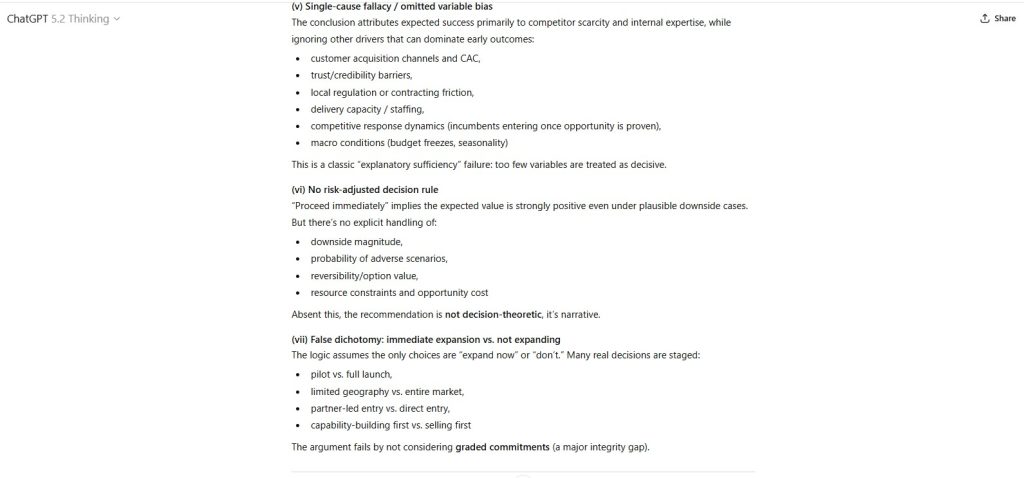
Figure 4 — Identification of missing risk-adjusted reasoning and binary decision framing

Figure 5 — Evaluation of whether the available information is sufficient to support the recommendation
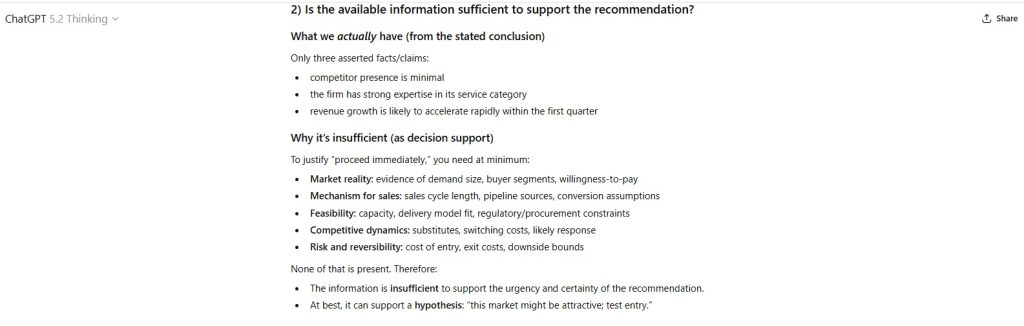
Figure 6 — Reconstruction of a corrected decision framework introducing staged strategic options
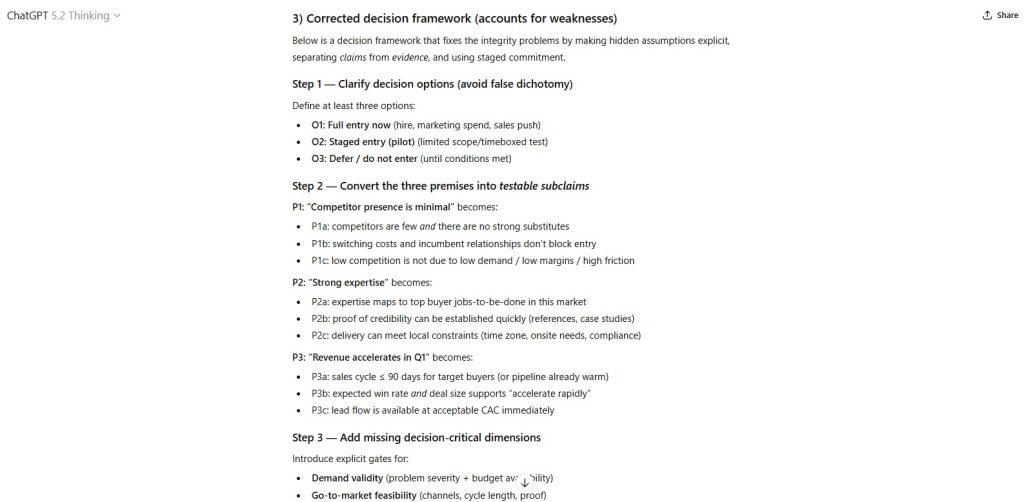
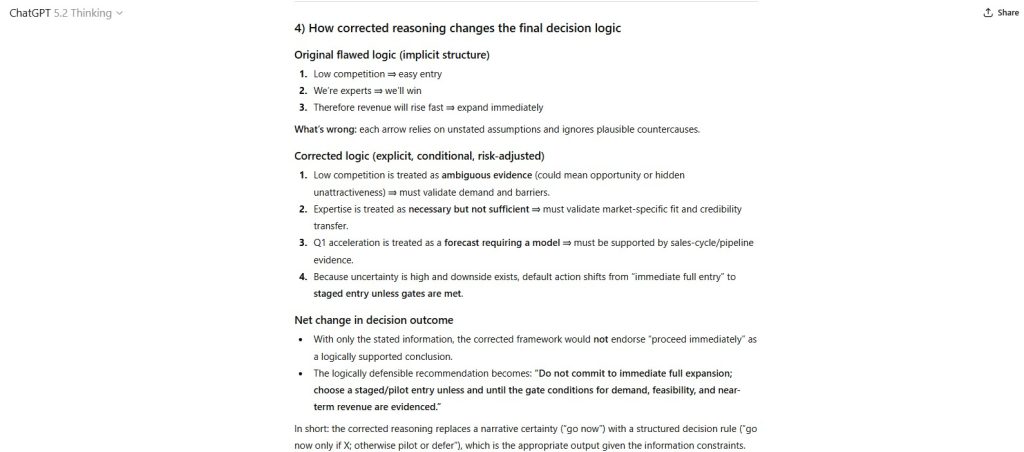
Figure 7 — Revised strategic decision logic comparing flawed reasoning with corrected conditional logic
Capability Domain Evaluation
Failure Recovery & Adaptive Correction Logic
This domain evaluates the model’s ability to identify structural failures within an existing argument and produce a corrected reasoning framework.
The assessment focuses on the model’s ability to:
• detect hidden assumptions
• identify logical inconsistencies
• evaluate information sufficiency
• reconstruct corrected decision logic
The objective is not to produce business advice but to examine the model’s reasoning repair capability when presented with flawed analytical conclusions.
Observed Strengths
The model demonstrated several capabilities consistent with structured analytical reasoning.
The response systematically identified multiple weaknesses embedded within the original recommendation. These included unsupported causal assumptions, omitted variables influencing market entry decisions, and the absence of risk-adjusted decision logic.
The model also separated the original reasoning from the reconstructed framework, allowing the analytical flaws to be examined independently from the corrective process.
Additionally, the model introduced staged decision pathways rather than preserving the binary decision structure present in the original conclusion.
Observed Constraints
While the model successfully identified reasoning weaknesses, several limitations were observed.
The reconstructed decision framework remained conceptual rather than operational. Although key variables were identified, the model did not quantify thresholds or provide measurable criteria for evaluating decision conditions.
Furthermore, the framework relied on general decision logic rather than domain-specific market data, requiring additional human analysis to translate the framework into practical implementation.
Institutional Assessment
Under controlled prompt conditions, the model demonstrated the ability to perform structured reasoning repair when presented with a flawed strategic conclusion.
The response identified missing assumptions, challenged unsupported claims, and introduced a corrected analytical structure that replaced narrative reasoning with conditional decision logic.
This behavior indicates a strong capability for detecting reasoning failures and constructing revised analytical frameworks within the Failure Recovery & Adaptive Correction Logic domain.
Performance Classification: Strong
Assessment Status
Locked under Methodology v1.0.
Structural revisions require formal version update.
— First Tier Review
Leave a Reply